I loved using human-centered design to help shape climate coverage at LAist
Company: LAist
Project: Shaping the climate emergency beat with human-centered design
My role: Source-finder, interviewer, listener, notetaker, synthesizer, producer, collaborator
We started with 20 thoughtful interviews
Our new climate reporter, Erin Stone, had just started at LAist. Our engagement team wanted to help Erin and her editor, Rodrigo Cervantes, make their coverage as effective as possible. We wondered: What should guide our coverage? How does our community experience climate change? What would be most useful information for readers/listeners/engagers? To explore this, we set up 20 interviews with:
People who worked in industries impacted by climate change
Young parents
Climate entrepreneurs
Those living in wildfire areas
Science teachers
Farmers
Immigrants from countries experiencing negative effects of climate change
Those who identify as housing insecure
Those who identify as indigenous
Homeowners who invested in solar
Climate change activists
Conservationists
Those in their late teens or early 20s
We also ensured the group authentically reflected the communities of Southern California. We offered folks $75 for their time. We met mostly on Zoom and took turns being interviewers and notetakers.
One of the ways we found interviewees was by reaching out to people who had previously asked us a climate-related question via Hearken. One person had asked a question three years prior, and not only was she very game to chat with us but her interview was one of the most compelling and memorable! It taught me to not let time stop me from reaching out to people.
What we asked
You can get the full interview guide in our Medium article, but these are some of the questions we asked during our 45-minute interviews:
Take us through your day yesterday. It’s ok if yesterday wasn’t a typical day.
What do you love about living here? What’s the most challenging part about living here?
Tell us about a time when you felt empowered to take action or make a difference.
What about the opposite — when you felt really disempowered to do anything.
What keeps you up at night?
Where in your life do climate-related issues feel most important or relevant to you?
What do you wish you knew about climate change and climate-related issues?
My favorite question was this one:
Climate change is like _________(WHAT)________ because ________(WHY)________.
I remember so many memorable conversations. One farmer had intriguing water supply ideas. One person started a business servicing electric vehicle charging stations. These interviews game me energy.
What we gained
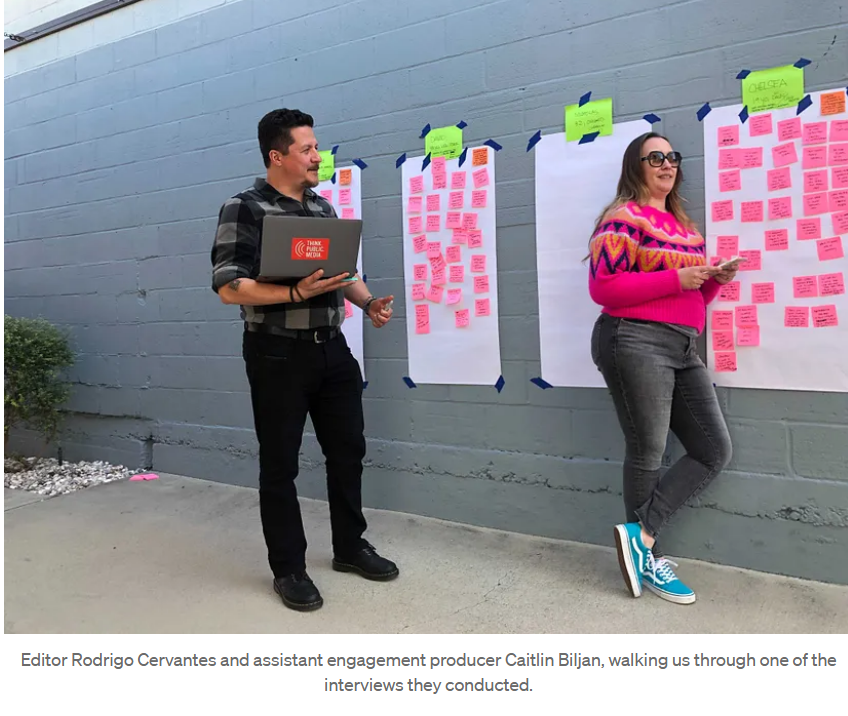
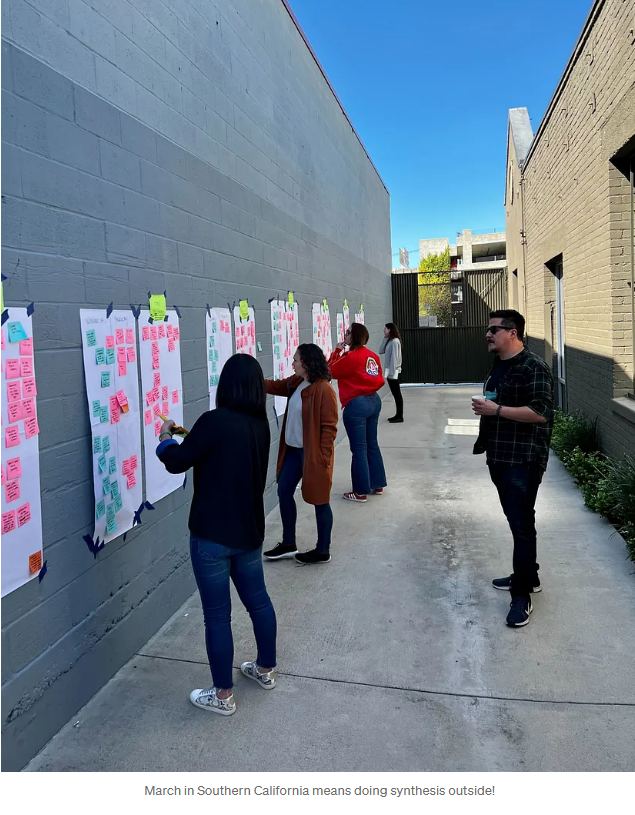
After a deep, three-day group debrief of all of our interview notes (with the guidance of human-centered design expert Tran Ha), here’s what we came away with:
A new mission statement for our climate reporter
Clear guiding principles to help us decide what to cover (and how to cover it)
Four archetypal information seekers who we could focus on serving
Our climate reporter’s mission statement
The climate emergency is a global challenge that is experienced locally. Erin Stone aims to equip Southern Californians with the information and connections they need to understand, cope with and prepare for the changes caused by the climate emergency — and take effective action here at home.
Our guiding principles
Center equity and justice. They are intertwined with climate issues.
Redefine who the “experts” are. It’s not just scientists, but also those with lived experience.
Bridge the rural-urban divide. Cover how we are connected.
Show that nature is HERE. It’s not far away.
Demonstrate that adaption is good for business. Stewardship can bring economic success.
Center humans. Spotlight what individuals are doing.
Help people “find their lane.” This was HUGE. It is a strong antidote to climate grief — finding your niche. A way to help the “stuck.”
Connect the past to the future. Look to ancestral wisdom for smart stewardship and solutions.
Acknowledge the big picture and contextualize it. It’s many decisions over a long period of time.
Prepare people emotionally and practically.
These are summarized but you can get the full details in our Medium article. Likewise with the archetypes below.
Our four archetypal climate readers/listeners/engagers
1. The Community Connectors
They are information nodes and relationship builders who help people in their community live more sustainably, build resilience and adapt to the changing climate. They are tuned in, not burnt out. They believe in the power of the collective to address the climate emergency and they have found their lane in that collective response. They trust that others have, too.
“If I had something that was like…a fact sheet that I can get when I’m speaking to [my neighbors], then that would really help me out. And plus, that will build up my confidence [in the information].”
We wondered:
How might we identify communities and the connectors who can help us reach them to collaborate?
How might we equip these community connectors with accessible, easily shareable information to help build the resilience of their communities?
How might we build a two-way information exchange between community connectors and high-information connectors?
2. The High-Information Connectors
They are people with expert-level information on climate issues, whether through lived or professional experience. They are well-connected in their communities of activists, policymakers, etc., but lack connections at the community level.
“Ninety-eight percent of scientists say we’re in deep caca. I’m listening to that. How can you not? I go to a doctor to be healed. I don’t go to my mechanic — he works on my car.”
We wondered:
How might we expand the definition of climate experts and narratives so that the work feels less out of touch?
How might we help them make their knowledge more accessible?
How might we build a two-way information exchange between community connectors and high-information connectors?
3. The Stuck
They are people who have good access to information on and understanding of climate issues but are filled with dread, despair, anger, and/or frustration — and overwhelmed by their negative emotions, with nowhere to take them. They are burnt out and skeptical or even certain that there is little that they can do. They used to believe in the collective, maybe, but don’t anymore. They’re disengaged or on their way to being disengaged as a form of self preservation.
“When something you spiritually care about is being destroyed, it’s painful.”
We wondered:
How might we increase their resilience and help them envision a future that is not dystopian?
How might we help them find their lane and engage in an emotionally sustainable way?
4. The Practically Minded
They are pragmatists who don’t give the climate emergency much thought, either because they are skeptical or because the idea that they can or should do something feels impractical or idealistic. Typical coverage of the climate emergency feels irrelevant or out of touch. They are individualistic and are unlikely to be compelled to do something unless it’s good for them, especially their wallet.
“There’s this huge need…but most importantly there’s this huge opportunity to give people space to earn money. There’s stupid money in climate tech right now. It’s ridiculous and it’s only going to a certain group of people. Economic development opportunities are always #1 for me.”
We wondered:
How might we help the practically minded understand how the climate emergency will affect their livelihoods, financial stability and lifestyles?
How might we help Southern Californians understand climate adaptation as good for their wallet?
How might we help residents and business owners thrive as they adapt?
How might we elevate expertise that the Practically Minded respect, such as businesspeople?
Other questions that emerged
How can we push storytelling to be more engaging and creative?
How can we humanize and redefine key aspects of climate, such as the meaning of nature and who the experts are?
How can we enter into climate conversation through the lens of L.A.’s most pressing issues?
How can we make climate science more accessible and create space for skepticism and confusion?